
If you’ve ever said,
“I don’t know why this keeps happening,”
or
“Why won’t this one go away?”
You’re not alone. One of the biggest misconceptions about acne is that it’s all the same. But in reality, different types of acne form in different ways — and they require different approaches. Understanding what you’re actually dealing with is the first step toward clearing it safely and effectively.
Let’s break it down.
1. Closed Comedones (Whiteheads)

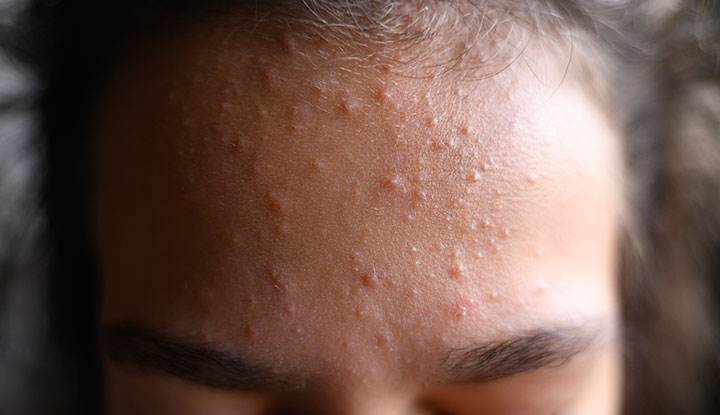
Closed comedones are small, flesh-colored or white bumps that sit under the surface of the skin.
They form when:
-
A pore becomes clogged with oil (sebum) and dead skin cells
-
The opening of the pore remains closed
Because they aren’t exposed to air, they stay white or skin-toned rather than turning dark.
These are considered non-inflammatory acne lesions.
They often feel:
-
Bumpy
-
Textured
-
Like “little grains” under the skin
Treatment focus:
-
Gentle exfoliation
-
Cell turnover support
-
Barrier-safe acne care
-
Avoiding heavy or pore-clogging products
2. Open Comedones (Blackheads)


Blackheads are also clogged pores — but in this case, the pore stays open.
When the trapped oil and debris are exposed to air, they oxidize and turn dark. That dark color is not dirt — it’s simply oxidation.
These are also non-inflammatory lesions.
Common areas:
-
Nose
-
Chin
-
Forehead
Treatment focus:
-
Consistent, gentle exfoliation
-
Proper cleansing (without stripping the skin)
-
Avoiding aggressive squeezing that damages the pore wall
3. Papules
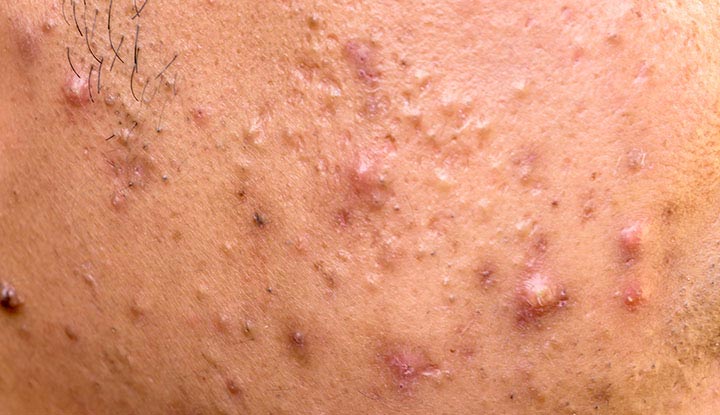
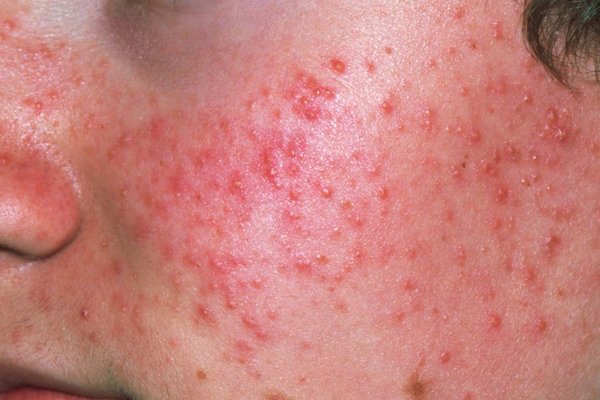
Papules are inflamed, red bumps that do not contain visible pus.
They occur when:
-
A clogged pore becomes irritated
-
The pore wall breaks down
-
Inflammation spreads into surrounding tissue
These are inflammatory acne lesions.
They may feel:
-
Tender
-
Warm
-
Sore to the touch
Treatment focus:
-
Reducing inflammation
-
Supporting the skin barrier
-
Avoiding picking (which can worsen inflammation and lead to scarring)
4. Pustules


Pustules are what most people think of as a “classic pimple.”
They’re red, inflamed bumps with a visible white or yellow center filled with pus.
That pus is made up of:
-
White blood cells
-
Bacteria
-
Dead skin cells
These are also inflammatory lesions.
Treatment focus:
-
Anti-inflammatory support
-
Acne-safe topicals
-
Resisting the urge to pop (which can push debris deeper into the skin)
5. Nodules & Cysts (Severe Acne)
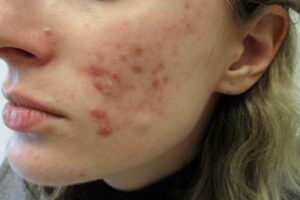
These are deeper, more severe forms of inflammatory acne.
Nodules are:
-
Large
-
Firm
-
Painful
-
Deep under the skin
-
Without a visible head
Cysts are:
-
Deep
-
Inflamed
-
Often filled with pus
-
Softer than nodules
-
More likely to scar
These lesions develop deeper in the follicle and often require professional guidance.
Treatment focus:
-
Professional acne protocols
-
In some cases, collaboration with a medical provider
-
Strict no-picking policy to prevent scarring
Why This Matters
Using the wrong approach for the wrong type of acne can:
-
Increase inflammation
-
Damage your barrier
-
Cause post-inflammatory hyperpigmentation
-
Lead to scarring
-
Prolong the breakout cycle
For example:
-
Over-drying inflammatory acne can worsen it
-
Ignoring closed comedones can allow them to progress into inflamed lesions
Acne isn’t just about “killing bacteria.”
It’s about understanding what’s happening inside the pore.
A Gentle Reminder
If you’re struggling with breakouts, it doesn’t mean you’re doing something wrong. Acne is multifactorial and influenced by:
-
Hormones
-
Genetics
-
Stress
-
Product choices
-
Barrier health
-
Internal and external triggers
Clear skin isn’t about perfection.
It’s about education, consistency, and supporting your skin — not fighting it.
And the first step is knowing what you’re actually looking at.
xo,
Mandy